The first source information about the village of Sosnowica dates back to 1446.At least from the beginning of the 16th century. The village was owned by the noble Sosnowski family. Probably in 1686. Thanks to the efforts of the owner of the village, Octavian Sosnowski, and by virtue of a privilege from King John III Sobieski, Sosnowica was granted municipal rights. Destroyed during the Napoleonic wars and depopulated, by decision of the authorities of the Kingdom of Poland in 1822. It lost its municipal rights. In the late 19th and early 20th centuries. The owner of the estate, Teodor Libiszowski, established several fish ponds here and built a mansion, thanks to which Sosnowica developed economically and demographically. In 1915. was burned by retreating Russian troops. After Poland regained independence, it gradually rebuilt itself from destruction as a local administrative and commercial center. Jews in Sosnovice - Until 1939. - The first Jews settled in Sosnowica in the second half of the 18th century. These were single families probably coming from Ostrów Lubelski and Parczew. In 1778. 20 Jews lived here, including. The son of the Hasidic tzaddik of Leczna, Shlomo Yehuda, Joszua Leib Ostrowski, later rabbi of Leczna, Wlodawa and Ostrów Lubelski. The local community was subordinate to the municipality in Ostrow Lubelski.By the end of the 19th century. Jews made up the vast majority of the settlement's residents. In 1910. Jewish entrepreneur from Parczew Szyja Moszko Szpektor opened a soda water and lemonade factory in Sosnowica. In the interwar period, the number of local Jews decreased significantly, but they nevertheless made up half of the population.There was a mikveh, a cemetery and a private beit ha- midrash in the home of Moshe Lerner. For several years there was an independent religious community here. According to the 1922 List of synagogues and houses of prayer of Wlodawa County. There was no synagogue here, but the Sosnowiec community owned a "square for a synagogue," and a rabbi and a shochet probably also lived in the settlement. In 1918. Jewish library was established.Among local organizations and political parties, in addition to the Orthodox Agudah, Zionist groups were also active.In 1937. Polish nationalists trashed Jewish stores and homes. The perpetrators of the incidents were detained by the police.Holocaust - the Germans, after occupying Sosnovitsa in early October 1939., murdered several Jews. In January 1941. Jews from Mlawa were resettled in the settlement, and in March - a large group of Jews from Lublin. At that time, in the area between the school building and the road leading towards the village of Sosnowica Lasek, the Germans created a small ghetto.Soon another transport of approx. 40 Jews from Mlawa, and in March 1942. - About 200 Jews from Kielce.In the summer of 1941. A camp for Russian prisoners of war was established near Sosnovitsa. After several of them escaped, local Jews were accused of helping to organize the escape and hiding prisoners - seven Jews were executed.In April 1942. The Germans took all the Jewish children from Sosnowica and deported them in an unknown direction. In November 1942. The rest of the Jews from Sosnowica were resettled in the Wlodawa ghetto, from where they deported all of them, along with the last local Jews, to the Sobibor death camp. Before the deportation, a large group of young people escaped to the surrounding forests, where some of them managed to survive until the end of the occupation.Several Jews also escaped during the deportation. In the spring of 1943. A group of Jewish refugees formed a partisan unit of the People's Guard-People's Army, commanded by Sosnowica resident Chil Grynszpan, a Polish cavalry non-commissioned officer before the war. His unit carried out several successful combat and diversionary actions against the Germans, as well as protecting and supplying food to the residents of the so-called "German" area. Bazar - a hidden forest camp for Jewish refugees in the Parczew woods, in 1942-1944 the largest concentration of Jews in the General Government.Judaika - Beit ha-midrash (defunct) - It is mentioned in historical sources in the late 10th or early 20th century. It was probably destroyed during World War I. It could also have been a private beit ha- midrash, since in the 1920s it is not listed among the facilities under the administration of the Ostrów Lubelski religious community, to which the Jews of Sosnowica were then subject. The location and appearance of the building are unknown.In the interwar period, the Jews of Sosnowica sought to establish an independent community, which was probably related to efforts to build a synagogue. However, it is not known if (and possibly when) the building was built or where it was located.
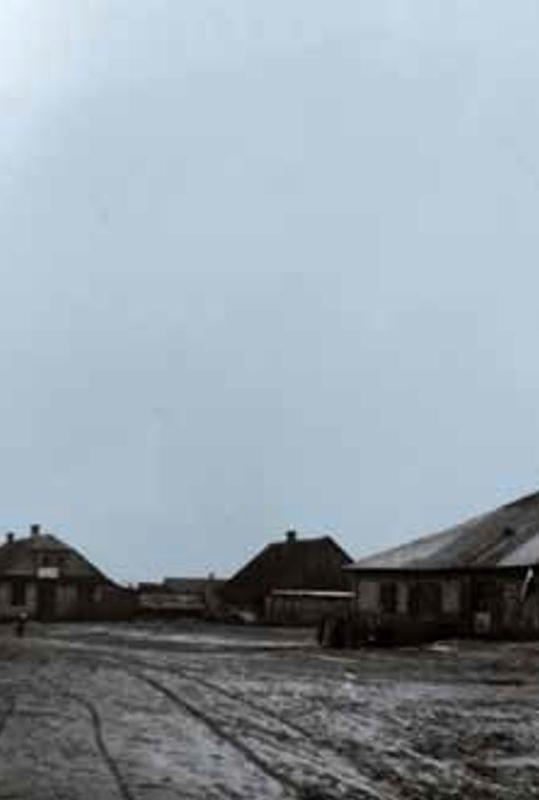
1. Sosnowica - Centrum miejscowości
Stories

Sosnovica - Center of the village
Jewish History Tours

Powered by Clio Muse Tours
Powered by Clio Muse Tours