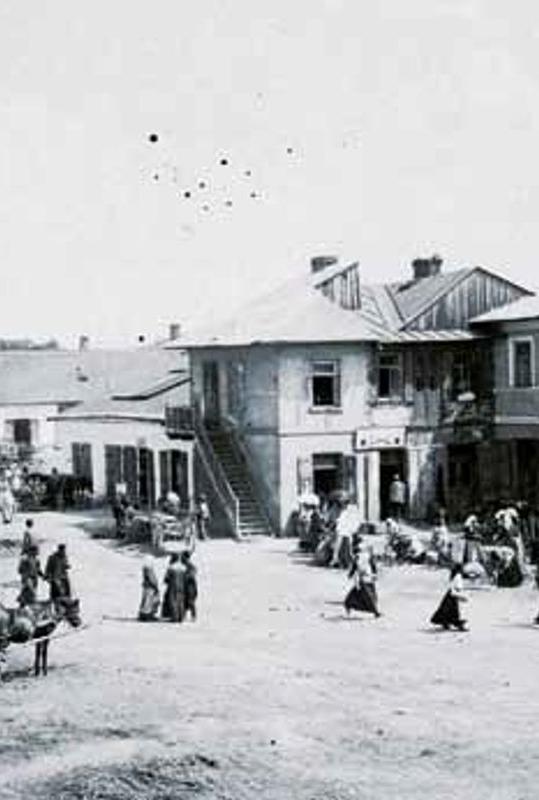
Probably in 1542, Mikołaj Rej of Nagłowice - an outstanding poet and prose writer, politician, Evangelical theologian, member of the Sejm and social activist - founded the village of Sawczyn on the land of the village of Kobyle. In 1547. By virtue of a privilege from King Sigismund the Old, he located a town named Rejowiec in its place. In 1561. Calvinist church was established here, while at the turn of the 16th and 17th centuries. The city was an important Protestant center.After the death of Nicholas in 1569. Rejovets became the property of his sons Andrew and Christopher. In 1648. was ravaged by Khmelnytsky's Cossacks, and in 1657. Its residents were decimated by a plague epidemic, nevertheless by the end of the 17th century. rapidly developed as a local trading center. In the early 18th century. The owners of Rejowiec were the Rzewuskis, who in 1720. They founded a church and a hospital (shelter). In 1781. The next owner of the town - Jozef Kajetan Ossolinski - built a magnificent palace here.In 1867 Rejovets was deprived of its municipal rights. In 1894. sugar factory, distillery, mills and sawmill were established here, in 1908. - power plant.Before World War I, two Orthodox Christians and a Jew sat on the community's board, in addition to 22 Catholics. During World War I, in July 1915., Rejovets was burned by retreating Russian troops, and in August of that year a cholera epidemic broke out there. Rejovets was inhabited by a religiously and ethnically diverse population; there were Catholics, Jews, Orthodox and Evangelicals. In the interwar period, the economic development of the settlement was fostered by, among other things. Railroad connection linking Rejowiec with Rawa Ruska. September 8, 1939. Rejovets was bombed by the German air force.Jews in Rejovets - Until 1918. - The first Jews, brought from Chelm and Krasnystaw by Mikołaj Rej, settled in Rejowiec in 1547. Another wave of Jewish settlers appeared in Rejowiec at the end of the 17th century.At first they were subordinate to the municipality in Chelm. In 1712. built a magnificent synagogue, and an independent religious community was also established at the same time.Jews lived mainly in the market area.In the 19th century. were the largest ethno-religious group in the city. Most made a living from trade and commerce, and by the end of the century there were numerous Jewish stores, artisan workshops and larger businesses, including. Oil mills, tanneries, puddling plants and sawmills. In 1846. There were a synagogue, a communal beit ha-midrash, a mikveh, an asylum (hospital) and a cemetery.At the beginning of the 20th century. Local branches of political parties and organizations were established in Rejovets. During the anti-Semitic riots that took place in November 1904., the local Bund cell formed a self-defense unit. In 1915. The community of rejowiec significantly increased in size, as Jews from Siedliszcze were included.As a result of material losses sustained during the war effort, the municipality in Siedliszcze was unable to function independently, and its representatives turned to the municipal board in Rejowiec to join the structures there. Two rabbis worked in the combined communities - in Rejowiec, S. Borensztajn, who in 1918. He was replaced by Hersz Jar, and in Siedliszcze by Chaim Ruzana. After the reconstruction of the synagogue and mikvah in Siedliszcze in 1927. The local municipality has regained its independence.Interwar period - Jews constituted a large and economically significant group of Rejovets residents. They lived mainly in the center of the settlement, where there was also a synagogue, a beit ha-midrash and a mikveh.Most made a living from petty trade and crafts.The chairman of the community board was Gotlib Pinkas. Zionist groups and the Bund had strong public support here.In 1937. There were acts of violence against local Jews in Rejowiec. .
1. Rejowiec Osada - Centrum miejscowości
Stories

Rejovets Osada - center of the village
Jewish History Tours

Powered by Clio Muse Tours
Powered by Clio Muse Tours