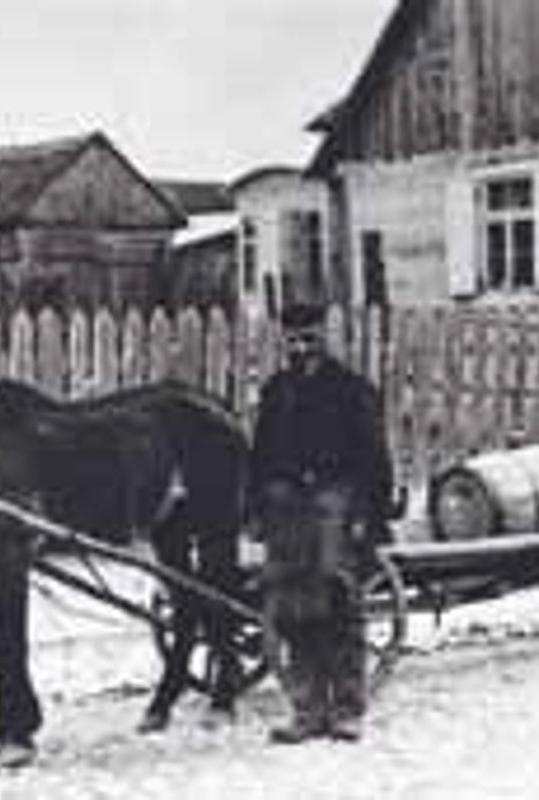
Janów Biskupi as a city under Chelmno law was founded in 1465. On the grounds of the Porch settlement, existing here since at least the early Middle Ages. The city owes its name to its founder and owner of the estate - Bishop of Lutsk Jan Losowicz. In 1497. was granted the privilege of three fairs a year, in 1730. King August II authorized another fair. The city, which was the seat of the Lutsk bishops and was favorably located on the trade route leading from Cracow toward Vilnius, developed rapidly both demographically and economically. In the second half of the 15th century. became an important religious center and a local trade and service center.In the 16th century. Two churches and a defensive castle were erected here. In 1570. Several craft guilds were active, including. furriers, shoemakers, stove makers and carpenters. The city suffered severely during the great fires (1575 and 1620), in 1656. It was destroyed and looted by the Swedes.In 1870, Janów lost its municipal rights. At the end of the 19th century. There were a municipal court and a municipal office, two two-class schools, a shelter for the elderly and cripples, and a postal station. During World War I, a fire destroyed much of the buildings.After regaining independence, Janow was restored to city rights in 1919. During World War II, it was the center of the underground of the Home Army, the Peasant Battalions and the National Armed Forces. In 1945. Destroyed and depopulated, Janów once again lost its municipal rights.Jews in Janów Podlaski - Until 1918. - The earliest surviving source references indicating the presence of Jews in Janov date back to 1583. - The papal nuncio's letter includes. Information about the synagogue that existed here at the time. No later than the early 18th century. an independent community was established, with its own synagogue, wooden beit ha-midrash and cemetery.In the 18th century.Jews played an important role in the city's economic development. Their main sources of income were trade and propination.In the mid-19th century. charitable and relief institutions were active at the municipality, including. Bikur Cholim. In 1904. A cell of the Bund party was established.Interwar period - The main sources of income for Janowska's Jews were trade and crafts. The board of directors of the local religious community included Chaim Sztejnklaper (mill owner), Moszko Kramarz, Jankiel Liberman (restaurant owner), Dawid Wajsman (shoemaker) and Srul Jankiel Grabarz (religious teacher). There was a synagogue, two beit ha-midrash, including a new one established in 1918 or 1919., mikveh, cemetery and ritual slaughterhouse.In 1937. old beit ha-midrash burned down. In addition to the Agudah and Bund, Zionist parties and organizations - Poale Zion-Left, Poale Zion-Right, Zionist-Revisionists and a branch of Mizrachi, founded in the 1930s - enjoyed strong public support. Zionist youth organizations were active - Ha- Shomer ha-Cair, founded in 1920, and He-Chaluc, existing since 1929.A large library operated under the auspices of Poale Zion. In the 1934 city council elections. Jewish representatives won four seats. In the second half of the 1930s, with the deepening economic crisis and Janów's loss of its position as the district capital, the economic situation of residents deteriorated significantly. Many Jews, especially young ones, emigrated.Holocaust - In September 1939. With the retreating Red Army from Janow to the east, many young Jews fled.In 1941, the Germans created a ghetto. In September 1942. Most of the 1,883 Jews who stayed here were resettled by the Germans to the ghetto in Biała Podlaska. A small group remained in Janov, employed in a labor camp at a horse farm in nearby Vygota. Soon the Jews of Janów, along with Jews from Biała Podlaska and neighboring towns, were deported to the ghetto in Międzyrzec Podlaski.In November 1942. All perished in the Treblinka death camp. Between December 1942. and August 1943. In Janow, 16 Jews were shot, hiding until then with Polish farmers in nearby villages.After the war - In January 1945. There were 27 Jews living in Janow who survived the war by hiding in the forests. By 1946. Dawid Finkielsztajn (who owned a restaurant before the war) was a member of the Commune National Council. In March 1946. Members of the Polish underground shot five Jews in Janow, including a Security Office collaborator. In late June and early July 1946. All remaining Jews from Janov were transported to the Recovered Territories.
1. Janów Podlaski - Centrum miejscowości
Stories

Janów Podlaski - the center of the village
Jewish History Tours

Powered by Clio Muse Tours
Powered by Clio Muse Tours