Jews in Dubienka - Until 1918. - The first Jews probably appeared in Dubienka around. 1589 r., although not until 1593. King Sigismund III Vasa officially allowed Jewish settlement in the city. He granted the local community the privilege of building and using a synagogue and permission to establish a cemetery.It was established in the western part of the city.The local community grew rapidly in terms of demographics and economy. Under the royal privilege, Jews had, among other things. the right to propinate alcohol, slaughter cattle and sell meat.They were engaged in trading and floating grain, building and selling river ships. In 1765. At the market square there were 38 houses owned by Jewish owners.A dozen Jewish-run inn houses were in other parts of the city. At the end of the 18th century. Tzadik and rabbi Uri Shraga Fajwel (d. 1806), a disciple of Yaakov Yitzchak ha- Levi Horowitz "the Seer from Lublin" and author of the famous work Or ha-chochma (Light of Wisdom), settled in Dubienka.Interwar period - Dubienka had a community synagogue and three private beit ha- midrash, one of which was established in 1893. The community also owned a mikveh and a cemetery.It united Jews from several surrounding towns. In 1930. The rabbi in Dubienka was Sucher Ber Kowartowski, a native of Leczna who held the position since 1897. In the 1920s and 1930s, the economic situation of local Jews deteriorated significantly, causing them to leave en masse for larger cities in the country and abroad. Jewish political parties and organizations were active in the town, including. Bund, Aguda and Zionist parties.In the early thirties, the "Yavne" Cultural and Educational Association was founded, running, among other things. educational activities among adults. Since 1930. Under the auspices of the Agudah, the Orthodox religious school for girls Beit Yaakov operated.Holocaust - After occupying the city, the Germans carried out the first mass executions of Jews and destroyed the synagogue and mikvah. They soon established a ghetto, where in the spring of 1942. housed nearly 3,000 people.In addition to local Jews, there were displaced persons from Krakow (about 100 people) and Mielec (about 800). The first deportation took place on June 2, 1942.About 250 people were then shot at the Jewish cemetery, while 2,670 were taken to the Sobibor death camp. Fifty-four Jews remained in the ghetto - artisans working for the Third Reich.The Germans executed them in the Jewish cemetery on October 19, 1942., during the final liquidation of the ghetto.
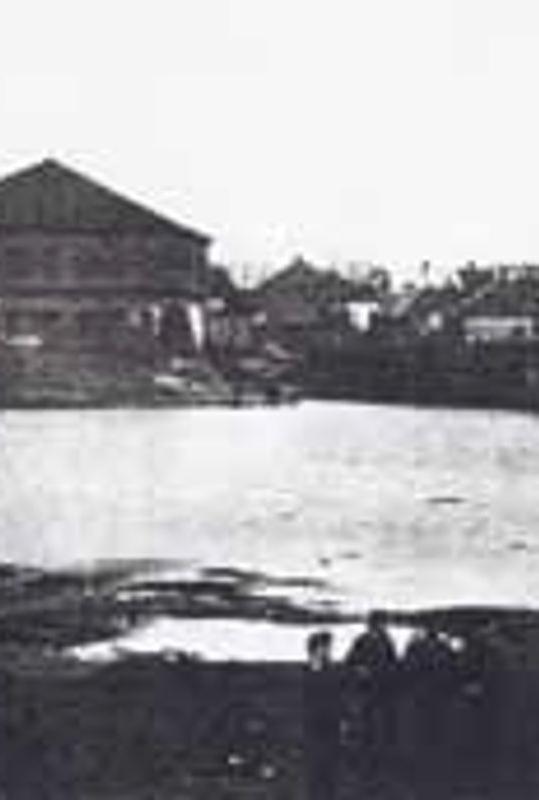
1. Dubienka - Centrum miejscowości
Stories

Dubienka - Center of the village
Jewish History Tours

Powered by Clio Muse Tours
Powered by Clio Muse Tours