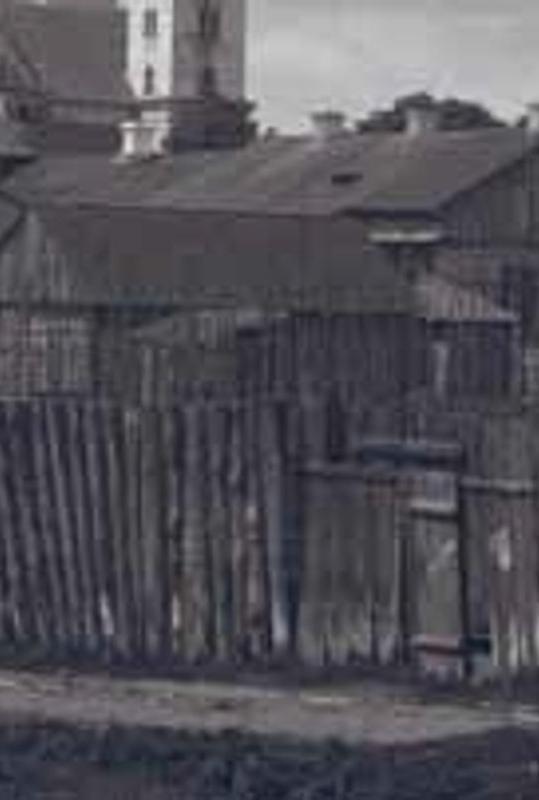
The village of Czemierniki is mentioned in documents from 1325-1327.In 1509 Mikołaj Firlej, by virtue of a privilege from King Sigismund the Old, located a town on its territory under the Magdeburg Law. Czemierniki, endowed by the king with a privilege for weekly markets and two fairs a year, developed as a service and trade town, which was also - thanks to the Firlej family - one of the centers of Protestantism. In the early 17th century. The next owner of the estate, Henryk Firlej, archbishop of Gniezno and later primate, founded a brick parish church dedicated to St. Peter and St. Paul. St. He also established the Church of St. Stanislaus the Bishop, abolished the church, founded the College of Mansionaries and built a magnificent mansion with a garden and a set of fortifications. In 1680, Czemierniki became the property of King John III Sobieski, in 1703. It was inherited by his son Jakub Sobieski, while around 1712. They ended up in the hands of the Humięcki family. In 1657 and 1703. were looted by Swedish troops, in 1711 and 1813. - almost completely burned down, and in 1855 and 1873 the residents were decimated by a cholera epidemic. In 1870. They lost their municipal rights. Around 1880. A steam sawmill, a water mill, a brewery, two oil mills, a brickyard, a soap factory, a community office, an elementary school and a credit union operated here. Between the two world wars, Czemierniki was a trade and service center and the seat of the municipality. In 1939-1944, partisans were active in and around the settlement.Jews in Czemierniki - Until 1918. - In a document dated June 1622. The owner of the estate - Archbishop of Gniezno and later Primate Henryk Firlej forbade Jews "for all time" to build and live in Czemierniki. It is likely that the ban was not strictly enforced, as as early as 1670., Zelman Markowicz - a Jew from Czemierniki - is mentioned in Lublin's grodzki books. At the end of the 17th century., the new owner of the estate - John III Sobieski allowed Jews to settle in the city.It can be assumed that at this time the first synagogue was established. In the township's books of 1688. Jews living in Czemierniki are mentioned - Szmujło and Jakub, in the books of 1694. appears Majer Aronowicz - an innkeeper of the Czemiernik estate, standing at the head of the local Jewish community, while in documents from 1698. - In addition to Aronovich, Shmer Boruchovich and Michael Yakubovich are also mentioned. In 1703 Jakub Sobieski designated the area for the establishment of a Jewish cemetery, in 1730. A new synagogue was built.In 1748.Jews were already living in 50 houses. Probably still in the first half of the 18th century. a community was founded, the existence of which is confirmed by the documents of the Diet of Four Lands.In 1848-1852 the rabbi of Czemiernik was Chil Gertner.In the 19th and early 20th centuries. Jews were mainly engaged in trade and crafts.Interwar period - Before the outbreak of World War II, a synagogue, cemetery and mikveh were under the community's management. The community included Jews from the surrounding villages of Skoki, Piaski, Zawada, Lurzawa, Wola Kamieniewska, Ostrówek, Leszkowice and Niedźwiada. In 1930. The rabbi of Czemierniki was Froim Foldman, the secretary of the religious community was Jakub Tauber, the caretaker of the synagogue was Moszko Kamionka, and the slaughterers were Dawid Gotendyner and Mendel Wajss. The economic situation for Jews in Czemierniki was difficult and worsened as the economic crisis deepened and anti-Semitic sentiment grew.Holocaust - After the outbreak of World War II, many local Jews fled the German occupation to the Soviet Union. In the village remained about 700 Jews.In the spring of 1940, the Germans created a ghetto in which, in addition to residents, they placed a large group of refugees from other towns, a total of - about 1,000 people. In 1942. They executed 36 Jews accused of helping the partisans. In late October and early November 1942. Jews residing in Czemierniki were deported by the Germans to the ghetto in Parczew, from where they were taken to the Treblinka extermination camp. .
1. Czemierniki - Centrum miejscowości
Stories

Czemierniki - Center of the village
Jewish History Tours

Powered by Clio Muse Tours
Powered by Clio Muse Tours