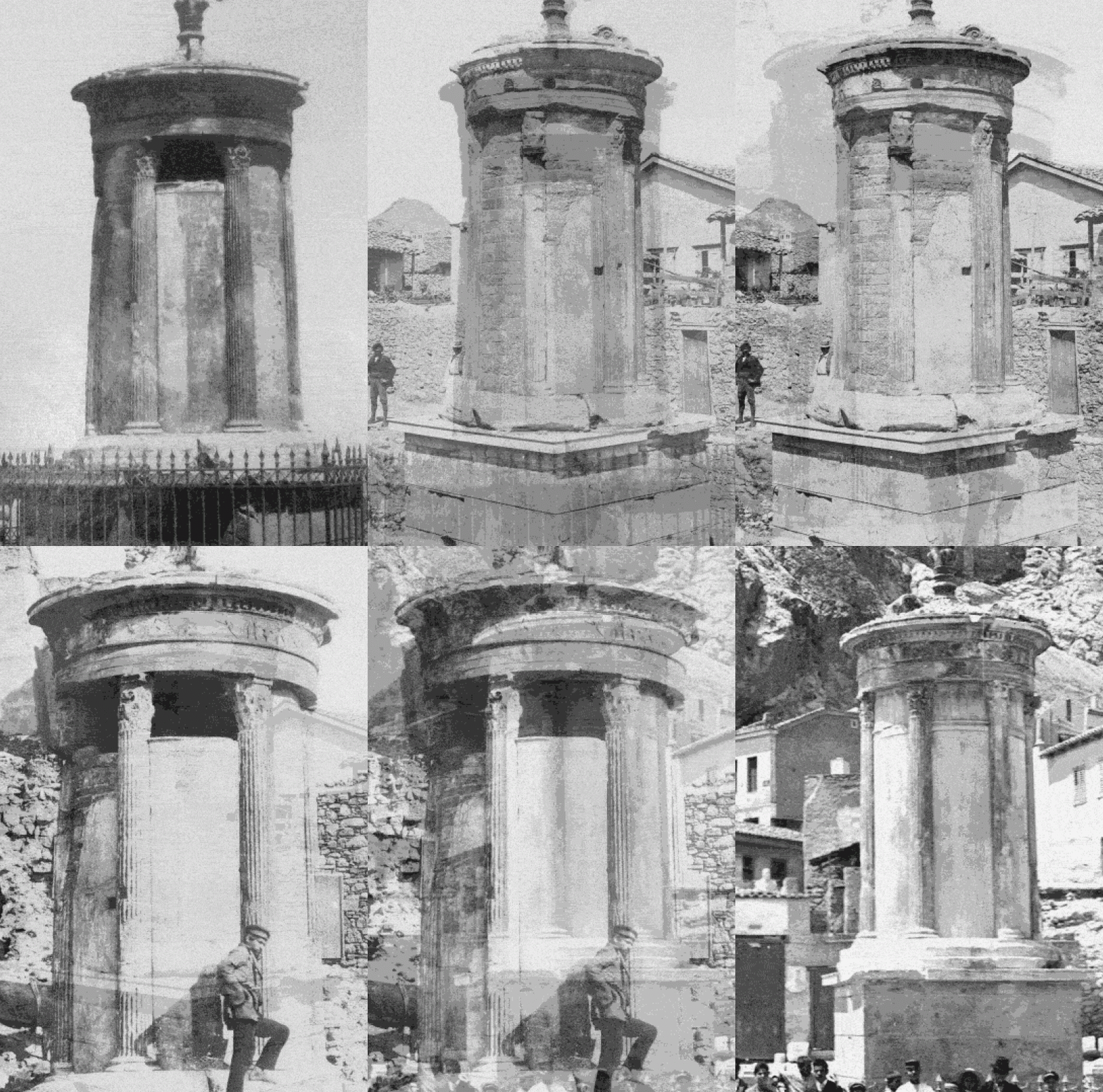
The annual festival of the City Dionysia was a large celebration in honour of the god Dionysus. The City Dionysia included performances of tragic plays. Wealthy Athenian citizens, known as choregoi, assumed the duty of financing the performances. A victory carried great prestige for the choregos who erected choragic monuments to commemorate their triumph. The Choragic Monument of Lysicrates commemorates his victory in 334 BCE. Local tradition associated the building with the famous orator Demosthenes, who supposedly used the echo produced by his voice in the hollow interior of the monument to overcome his stammering pronunciation. The building resembles an ancient lantern, so it was also called “Lantern of Diogenes”, the Cynic philosopher who was said to be searching for an “honest man” at midday. The monument was part of a Jesuit monastery until 1669 when Capuchin monks acquired it until 1824. The monks used the interior of the building as a library and reading room until the monastery was destroyed by fire.
10. Monument of Lysicrates
Along the ancient Street of the Tripods, visitors can admire a series of prominent monuments with a dramatic importance for the city.
Stories

A viral sponsorship
Excavation Fever
The archaeological fever that gripped various European countries in the nineteenth century could not fail to affect Athens. Excavations in the capital of the Greek kingdom would readily demonstrate the connection of the modern state to ancient Greece. The great Acropolis excavation in 1885-1890 shaped scientists’ perceptions regarding the city’s classical and subsequent character. A far more ambitious plan materialised in the ancient Agora in the twentieth century. The excavation necessitated the expropriation and demolition of an entire Athenian neighbourhood (Vrysaki). The Greek Archaeological Service and many foreign archaeological institutes brought to light ancient monuments and movable artefacts that enriched our level of understanding regarding ancient history. Unfortunately, not all researchers had pure motives, as evident in Lord Elgin’s case.
A Frenchman in Levante
The French commercial photographer Félix Adrien Bonfils (1831 - 1885) pursued his career in the Middle East. He was a pioneer who employed the Photochrom process invented in the 1880s to produce colourised images. He opened the famous photo studio “Maison Bonfils” with his family in Beirut. His work portfolio covers an extensive area, including Lebanon, Egypt, Palestine, Syria, Greece, and Constantinople.

Powered by Clio Muse Tours