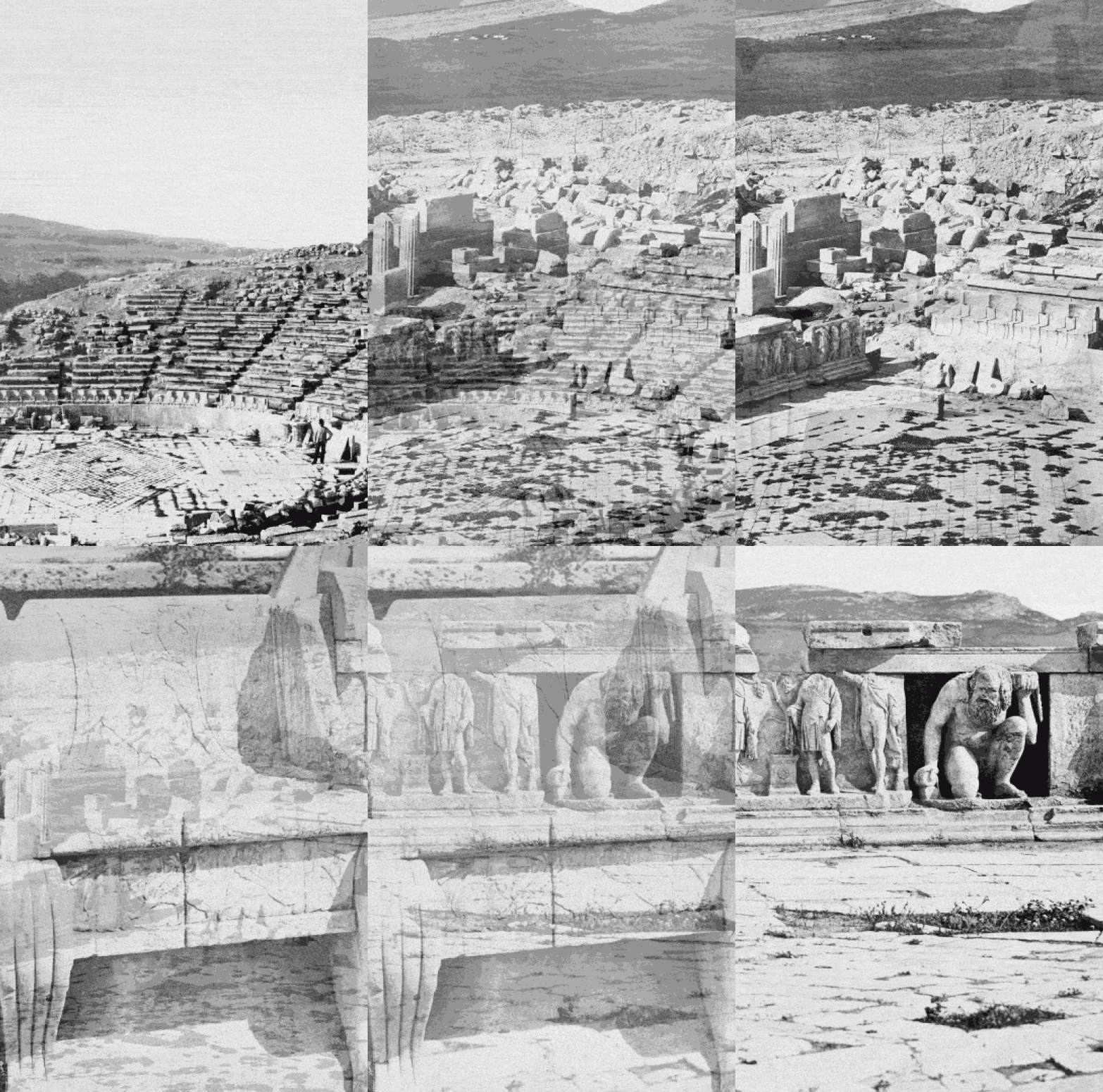
The southeast slope of the Acropolis was occupied by sanctuaries of Dionysus, the patron god of wine. The faithful used the area to perform the dithyramb in his honour and eventually built a theatre. The drama was, after all, closely associated with Dionysus. The evolution of the building is quite interesting. First came a circular orchestra, followed by the statue of the honoured god and the koilon (auditorium). Permanent seats were added at a later time. Then came the skene and a marble platform with stone reliefs illustrating scenes from the life of Dionysus. In 333 BCE, the orator Lycurgus transformed the theatre on a monumental scale. The Romans added their touch, but in the Christian period the structure fell into disuse. The dramatic performances were closely associated with the political and social realities, and there was a vital element of satire in some of these plays. The theatre of Dionysus hosted the plays of the three great tragedians (Aeschylus, Sophocles, Euripides) in the 5th century and accommodated the needs of the ecclesia (assembly of the citizens) in the fourth century.
9. Theatre of Dionysus
On the south slope of the Acropolis hill is the theatre of Dionysus, home to the world premiere of many masterpieces of ancient Greek tragedy and comedy.
Stories

The birthplace of theatre
The revival of Olympism
The idea of reviving the ancient Olympics began to circulate as soon as Greece gained its independence. Still, the new state was forced to deal with pressing practical needs before turning its attention to the promotion of athletics. Initially, the Olympic idea was associated with exhibitions that attempted to promote the insignificant industrial production of Greece. Soon, though, the attention of the international community focused on athletics. The Greeks decided to refurbish the Panathenaic Stadium to serve as a venue for the first international Olympic Games. George Averoff, a wealthy Diaspora Greek, contributed a significant amount of money towards the staggering cost of refurbishment. A circular panorama was erected on the shores of the river Ilissos. Visitors enjoyed images from various cities of the world while Athens could claim a new multicultural air and the status of a modern European capital.
Henri Beck: a Bavarian in Athens
Henri Beck was born in Umstadt, Germany, at the turn of the nineteenth century. He came to Greece in 1834 as a non-commissioned officer in the Bavarian corps that accompanied King Otto. At the end of his military service, Beck moved to Smyrna, where he learned the art of photography. In 1850, he came back to Athens. His photographs made Athens famous in Germany. Beck’s work has a clear historical aspect, but it is also defined by a unique style of an artistic quality that is notably absent from contemporary photographers.
Powered by Clio Muse Tours