Tobacco processing was seasonal work, usually lasting from April to October. Accordingly, the demand for workers fluctuated widely. Once inside the warehouse, though, these workers toiled together in relatively small spaces. Men and women worked side by side and were open to the ideas and influence of the everpresent union leaders, who even had a say in the hiring process. The workers’ solidarity extended from the neighborhood all the way to the tobacco warehouse and was expressed, when necessary, in a combative and determined labour movement. The Union of Tobacco Workers in Agrinio was established in 1911 and played a leading role in establishing the local Labour Centre in 1918.
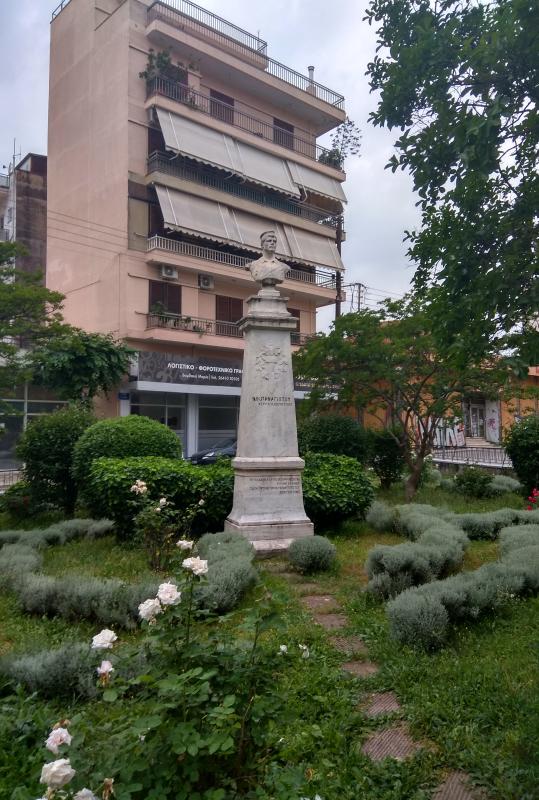
3. N.Panagiotou square (Koumpoura)
The economy and architecture of Agrinio was shaped by tobacco. But so was its society, with tobacco workers participating with enthusiasm in the national and labour struggles of the early twentieth century.
Stories

The great party of labourers
Arise, ye workers from your slumber
Tobacco workers in Agrinio were militant and protective of their rights. In November 1927 unemployed workers gathered outside the Papastratos warehouse, forced their way in and started working. Soon there were arguments and fistfights with the more conservative elements of the legitimate workforce who were already there. The gendarmerie removed the unemployed workers, but they came back again the next day, at which point the gendarmerie employed force to disperse the crowd, while some workers were arrested. When the same thing happened for a third day on November 3, the authorities requested and received reinforcements from Missolonghi.
Get well soon, we need to hang you
Nikolaos Panagiotou, whose bust stands in the middle of the square, was the son of a tobacco worker. At the height of the struggle for Macedonia between the Greeks and the Bulgarians, he left his native Agrinio and joined the guerilla group of Captain Mitrousis in Serres, a region northeast of Thessaloniki. On 14 July 1907, he was part of a group of five men who found themselves surrounded by the Turkish army in a church in the town of Serres. The Greeks fought valiantly for hours but eventually, two were killed by enemy fire, Captain Mitrousis committed suicide and Panagiotou (along with another Greek) was wounded and captured. They were imprisoned and interrogated for months, while their wounds healed. And then they were hanged on December 3rd.
Nea Odos
Powered by Clio Muse Tours
Powered by Clio Muse Tours